top of page
logo text.png
Project Story

Daniel have been involved with music and art since I was 5 years old, plays 4 different instruments, improvise, compose, has his own band in uni and a music channel with millions of views. 

​

"Patterns exists in sketches just like they do in music; with correct processing, is it possible to turn sketches directly into songs?" This has been a question that clinged to me for years and I finally found the time to test it.

​

And as it turned out, the answer is yes.

Mechanism
Screenshot_6.png
Screenshot_33.png

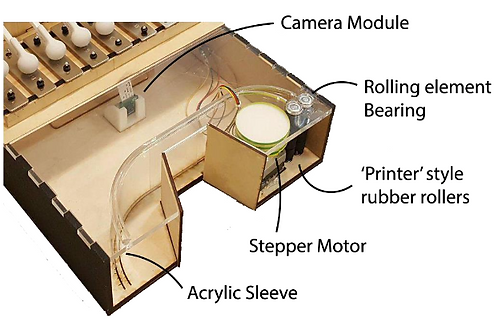
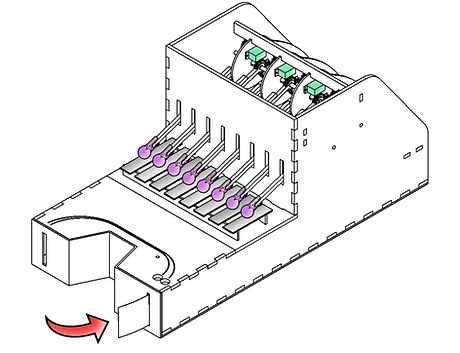
Marker sketches are made on card machine receipt styled paper strips and fed into the MozArt machine through the set of stepper driven printer style rubber rollers. The sketch is guided by the transparent smooth acrylic sleeve and captured by the camera module. The camera takes quick snaps of the strip and patches them into a complete picture. Both the stepper and camera are linked to a raspberry pi 3 which regulates the stepper and shutter speeds.

Algorithm
Screenshot_40.png

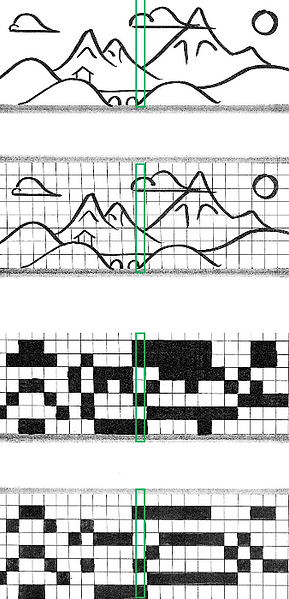
The algorithm for how the glockenspiel plays was designed to be broken down into four main steps.

​

• Before the main algorithm runs, a calibration function is run which calculates the threshold value for the main algorithm. This value is the lowest pixel value of a picture taken of blank paper. This means that all values below this are darker than the paper hence there must be a marker line there. This stage is done on a piece of paper at the start of the strip which is left blank.


• At each time step, a picture is taken before being cropped down to the central column. The threshold function is applied to each pixel so if its value is below the threshold value, its value is set to 1 to indicate there is a line there otherwise it is changed to 0.


• It was decided that the servo motors actuating the glockenspiel pieces would be controlled by a binary string. To do this the black and white image is scaled down to an eight by one vector of Boolean values indicating which of the eight notes should be played at each time step.


• The vector is then ‘neatened’ by removing notes which are next to each other to ensure the sound is harmonious so most drawings fed into the machine produce a pleasant sounding melody. This process provides something which, considering all of the notes are in the D Major scale, does not sound necessarily like a ground breaking piece of music, but is very interesting and rather pleasurable to listen to.

Future of MozArt

Due to the overwhelming interest and support MozArt received on its public display, I have decided to take the project further by "minigameifying" it into a wechat mini-program with my friend and professional music composer Vomyrak.


The program will feature an improved musicfication algorithm and a direct wechat sharing function, scheduled to launch in March 2019.

(Minimum Viable Technical Hack)

(Final Minigame Framework, Monetization Aimed for Competitive Social Media Sharing.

Still Curious?

Additional information on this project might be private, but please feel free to contact me to learn more!
© 2017 by DANIEL YIN

  • WeChat
  • LinkedIn
  • Facebook
bottom of page

DANIEL YIN

Custom FOC Stepper Driver

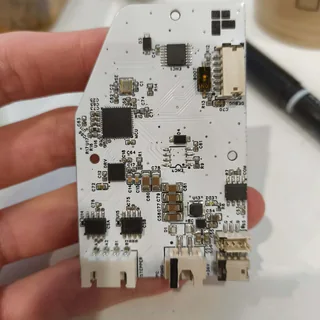
Fully custom NEMA23 FOC stepper driver, from MCU, encoders and driver to clock, power management and communications. Custom SimpleFOC-based firmware reached 3,000 rpm, delivering QDD-level dynamics in my Tepan system at 1/100 the cost.

AR Robotic Sandbox

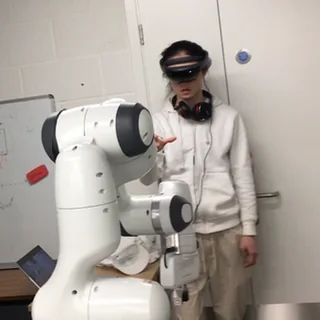
An AR virtual sandbox that tells a Franka Panda robotic arm where to place bricks. The AR application records and outputs brick sequence and position to a path planning system built using ROS. Robot control was implemented through Movelt.

Modular Smart Button

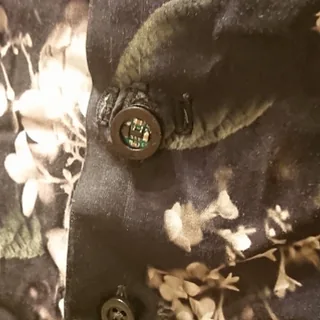
A innovative structural design for modular smart buttons in the form factor of a men's shirt button. The one in the picture shows an IC Button housing a 32-bit SAM Microcontroller and its power regulating circuit. The button can also house batteries, sensors and actuators. The buttons connect to each other with up to 8 conductive threads.

Audio Processing Dancing Segway

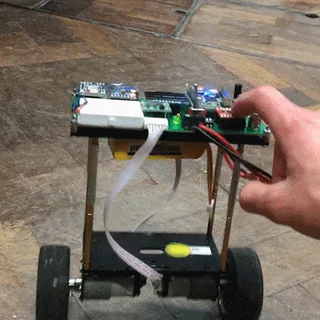
A self-balancing robot that dances to the beat of any music. Coded from scratch from a set of sensors, drivers and an empty pyboard.

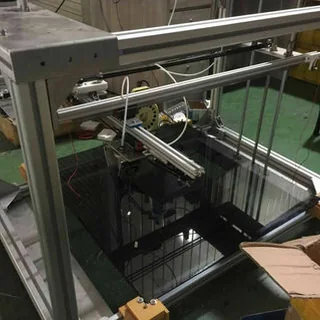
3D printer designs and builds

Over 2 years of founding and running the Creative Engineering Workshop at his highschool, Daniel and the team designed and built 3 different 3d printing systems. He was later invited as the youngest member of the additive manufaturing association of the Guangdong province in China and secured his first internship at Riton Lazers co., ltd.

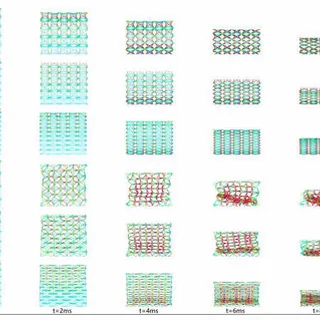
Dynamic Stress Propagation & Energy Absorption of Lattices

Generated and investigated the dynamic stress propagation and energy absorption properties of several novel lattice structures via Rhino w/ Grasshopper -> LS-Dyna simulation. And grounding with physical test rig, 6 axis force sensor and high speed camera.

Mûzone

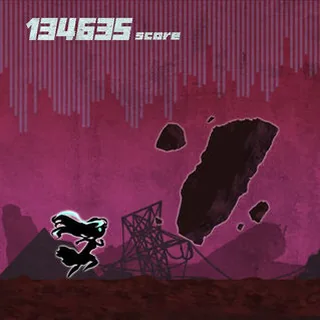
An in development indie game that originated from one of Daniel's personal projects at a 3-months coding bootcamp at General Assembly.

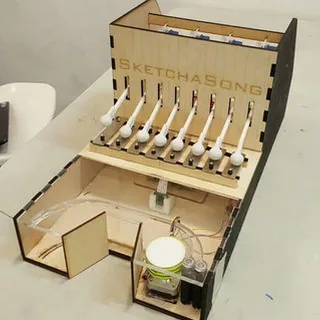
MozArt

A physical computer that turns sketches into songs. Mozart is currently being developed into a full music composition app aiming to initially penetrate the market of chinese wechat users.

Donaco

Daniel was the full-stack developer and UIUX designer for an AI for Charity startup Donaco from April to September 2017. The startup has won first place at the 2017 Microsoft Imagine Cup UK Finals and being selected as Imperial College London's 3 startups of that year.

iLock!

An ultra intuitive screen unlocking system that utilizes the 2 halves of the phone and tapping and swiping actions. This prevents leaving any decipherable smudges on the screen and allows blind tactile input that cannot be caught on camera. (Microsoft 3-hack best design award)

The tetromino project

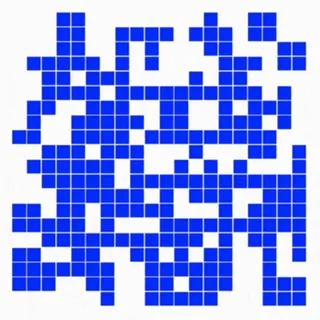
A custom written algorithm designed to fill in a tetromino shade that has an arbitrary size and density, achieving accuracy of 96% and filling 10k squares in 3.2 seconds. The algorithm runs in linear time complexity.

Reverse Engineering Project

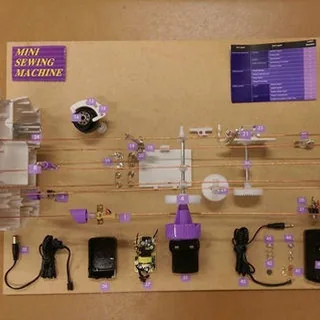
A materials and production analysis project for the interior of a mini sewing machine. A bill of material and production process was made and their properties and environmental impact analyzed.

Pal-V Flying Car Chassis

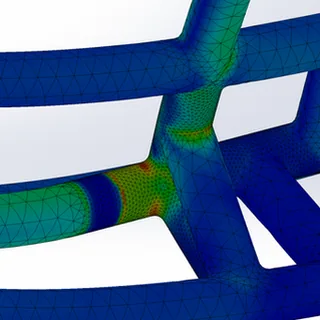
An iterative structural design process for the chassis of Pal-V, a personal flying car. Utilizing the finite element analysis features in solidworks.

Materials Design Project

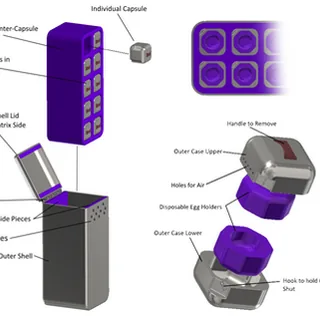
A material analysis and selection project for a sea turtle egg carrying case

Robot Pathfinder and Soccer Challenges

The quickest robot to find it's way out a maze and the most nimble and accurate soccer shooter

Catapult Trajectory Calculation Project

An introductory mechanics project calculating for counter weight and firing angle to shoot a ball into a basketball net 20 meters away.